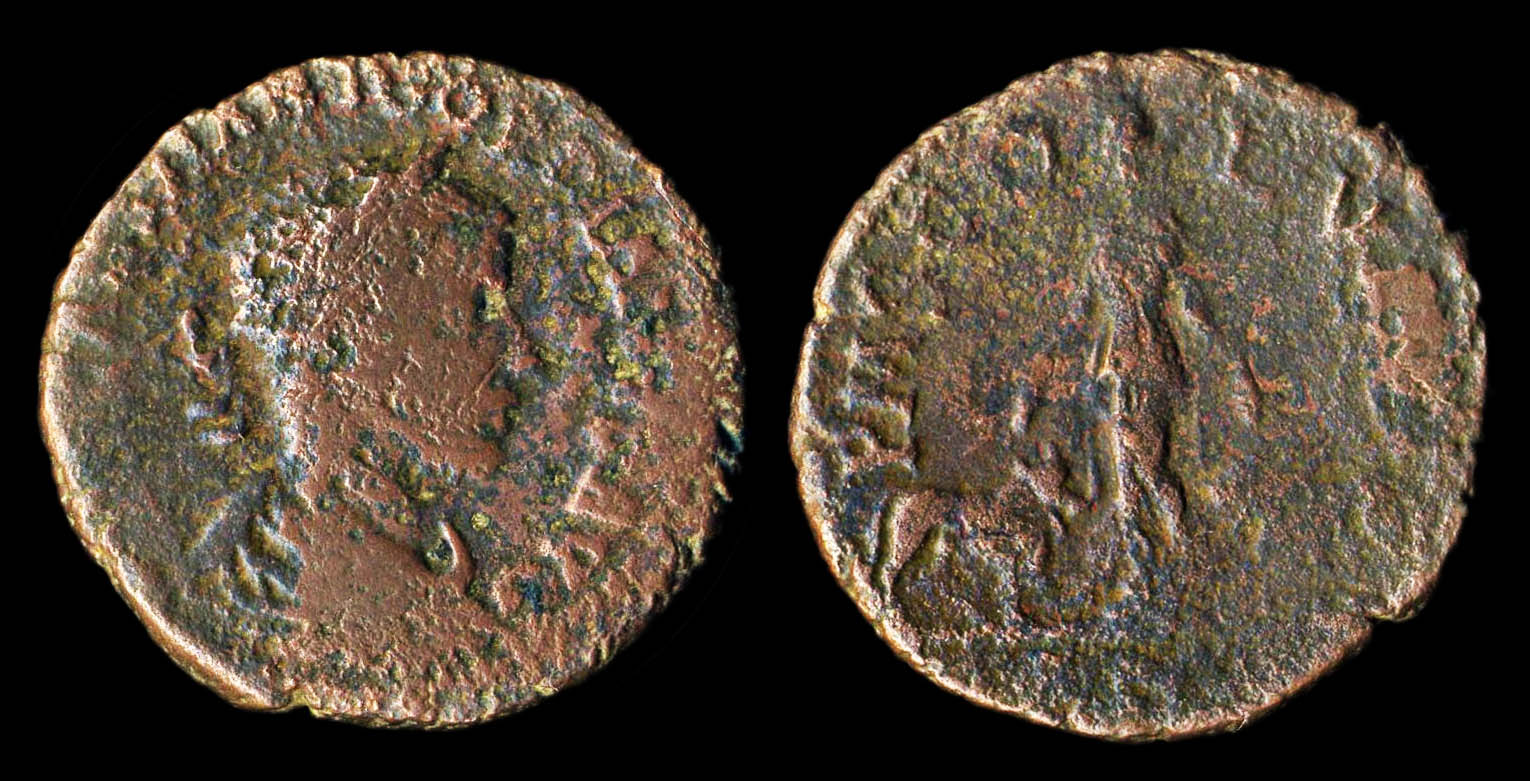
MOESIA SUPERIOR VIMINACIUM Gordian III 238-244 AD bronze year 1 (238 AD)
$ 18.00
DescriptionBalbinus and Pupienus adopted the grandson of Gordian I as heir. That didn’t prevent their murder by their guards, and the grandson was acclaimed as Gordian III. The menu for the reign was war with Persia, which went well, but then his right hand man died, likely poisoned, and was replaced by Philip the Arab, who schemed to undermine the Emperor’s popularity. He succeeded, and Gordian was executed.Moesia was a region spread over southern Romania, Kosovo, and Serbia, and northern North Macedonia and Bulgaria. The Romans conquered the parts of it during the late Republic to protect their holdings in Macedonia to the south. That was their operating principle: extend their territories to protect what they already had. Like all other attempts at world conquest, it failed due to lack of resources. In Moesia, during the 3rd century AD, a number of cities issued large, well made bronze coins. Marcianopolis is now the Bulgarian town of Devnya. Elagabalus was a notably wierd Emperor whose personal characteristics interfered with governance. Julia Maesa was his grandmother, and a political person whose activities eventually brought her boy to the throne.The Romans, as they were building their empire, preferred to let the local coinage arrangements remain in place. As they developed their political system into the Cult of Personality that was the Empire, they started putting imperial portraits on the local coins. Later, as the Empire began to shrink, they preferred to centralize their coinage operations, eliminating local control. There were also allied and client states, some of which, at times, issued coins celebrating the alliance or subservience. The main catalog reference for these coins on this web site is Greek Imperial Coins and their Values, by David Sear.
Panašūs produktai
-
Bolso para mujer de Guess Accesorios – HWKO9515010
-
Bolso para mujer de Guess Accesorios – HWQB9495080
-
Bolso para mujer de Guess Accesorios – HWPG9497200
-
Bolso para mujer de Guess Accesorios – HWQB9495210
-
Bolso para mujer de Guess Accesorios – HWPG9497020
-
Bolso para mujer de Guess Accesorios – HWRP9350700